

Polo shirts are among the most popular garments for embroidered logos, names, uniforms, and promotional branding. However, embroidering a polo requires more than simply placing an existing logo into an embroidery machine. Embroidery Digitizing Services convert artwork into a stitch-based design while considering the polo's fabric, collar, seams, placement, and the size of the design.
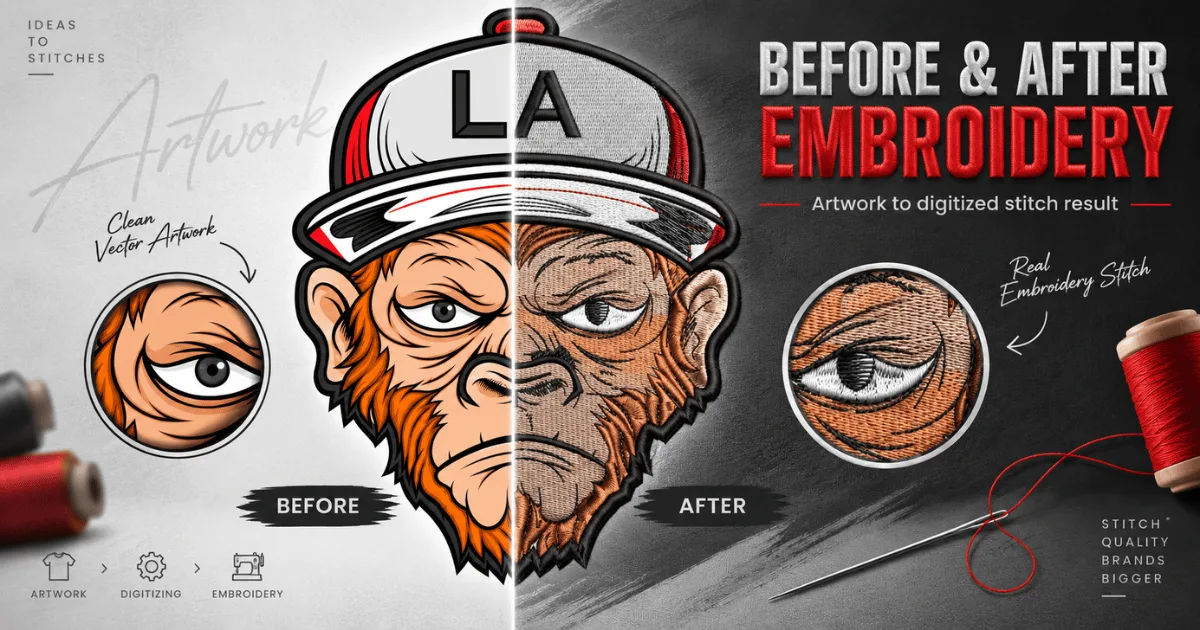
Because polo shirts are usually made from knit fabrics such as pique, jersey, or performance polyester, digitizing must be handled carefully. A design that works perfectly on a jacket or cap may not produce the same results on a lightweight polo. Proper digitization helps prevent puckering, distortion, excessive stiffness, thread buildup, and poor registration.
This comprehensive guide explains how professional digitizers prepare embroidery designs specifically for polos, what factors they consider, how logos are positioned, and what businesses should know before ordering embroidered polo shirts.
Why Are Polos Different for Embroidery?
Polo shirts have a different structure from many other garments. Their fabrics are often flexible, textured, and relatively lightweight. This flexibility makes them comfortable to wear, but it also creates challenges during embroidery.
When the embroidery machine moves the needle repeatedly through the fabric, the material can shift or stretch. If the design contains too many stitches or uses incorrect stitch directions, the fabric may pull toward the embroidered area.
A professional digitizing process accounts for these characteristics before the design reaches the machine.
Common Polo Fabrics
Pique cotton is one of the most common fabrics used for polo shirts. Its textured surface can hide minor imperfections, but it still requires suitable stitch settings.
Jersey-knit polos have a smoother and more flexible surface. They may require additional stabilization because the fabric can stretch during stitching.
Performance polos made from polyester or blended materials can present another set of challenges. Their smooth surfaces may show registration problems more clearly, while some synthetic fabrics can react differently to heat and thread tension.
Fabric Weight Matters
A heavyweight polo can generally support more embroidery than a lightweight garment. A thin polo, however, may become uncomfortable if a large design contains dense stitching.
Professional Embroidery Digitizing Services consider fabric weight when determining stitch density, underlay, and design size. This helps maintain both appearance and wearer comfort.
How Is a Polo Logo Prepared for Digitizing?
The first step is usually reviewing the original artwork. A customer may provide a JPG, PNG, PDF, AI, EPS, or another format. Not every file is immediately suitable for embroidery.
Embroidery uses stitches rather than pixels or traditional vector shapes. Therefore, the artwork must be interpreted and converted into embroidery objects.
Reviewing the Artwork
A digitizer examines the logo's shapes, lettering, colors, outlines, and fine details.
Very small elements may not translate effectively into stitches. Thin lines can become unclear, while tiny text may lose readability after being stitched.
The digitizer may recommend simplifying certain details or slightly modifying small elements so the finished embroidery remains recognizable.
Selecting Stitch Types
Different portions of a logo may require different stitch types.
Satin stitches are often suitable for borders, lettering, and narrow shapes. Fill stitches can cover larger areas. Running stitches may be used for fine outlines or details.
The goal is not simply to reproduce every visual element with stitches. The goal is to create a design that looks clean when sewn onto fabric.
How Do Digitizers Choose the Correct Design Size?
Size is particularly important when embroidering polos. Most company logos are placed on the left chest, where available space is limited.
A logo that looks attractive on a computer screen may become too dense or difficult to read when reduced for a polo.
Left-Chest Embroidery
Left-chest embroidery is one of the most common applications for polo shirts. The design is typically kept compact enough to maintain a professional appearance without overwhelming the garment.
Digitizers consider the width and height of the logo, the amount of lettering, and the smallest details.
A professional digitizer may adjust proportions slightly if doing so improves stitch quality.
Larger Back Designs
Some polos feature larger embroidery on the back. These designs can contain more detail, but density and garment stability still need to be considered.
A large design with excessive stitches can make a polo feel stiff. It can also increase production time and thread consumption.
Professional Embroidery Digitizing Services balance coverage and stitch count to achieve an attractive result without unnecessarily weighing down the garment.
What Role Does Stabilization Play?
Stabilization is essential when embroidering knit polo fabrics. Without proper support, the fabric may move or stretch as the needle penetrates it.
A stabilizer helps hold the material in position and reduces unwanted distortion.
Choosing the Right Stabilizer
The appropriate stabilizer depends on the polo's fabric, design size, and embroidery density.
Some projects may benefit from a cut-away stabilizer because it provides long-term support for stretchy materials. Other applications may use tear-away or specialty stabilizers depending on the fabric and production requirements.
The stabilizer should support the embroidery without creating an unnecessarily heavy or uncomfortable result.
Preventing Puckering
Puckering occurs when fabric gathers around embroidered areas. It can make a professionally branded polo look uneven.
Proper stabilization, suitable stitch density, appropriate underlay, and correct machine tension all contribute to reducing puckering.
Digitizing plays an important role because excessive stitching can place unnecessary stress on the fabric.
How Is Stitch Density Controlled?
Stitch density refers to how closely stitches are placed within an embroidered area. More stitches do not automatically mean better embroidery.
If a design is too dense, the embroidery can become stiff and heavy. It may also cause the fabric to pull or distort.
If density is too low, the underlying fabric may show through and make the logo look incomplete.
Matching Density to Fabric
Professional Embroidery Digitizing Services adjust density according to the polo material and the specific design.
A lightweight performance polo may require different settings from a heavy cotton pique shirt.
The digitizer also considers the size of each design element. A large area does not necessarily need to be filled with maximum density to achieve good coverage.
Why Is Underlay Important?
Underlay is stitching placed beneath the visible embroidery. It provides a foundation for the top stitches and helps stabilize the fabric.
Without suitable underlay, some embroidered areas can look uneven or fail to maintain their intended shape.
Different Underlay Approaches
The appropriate underlay depends on the shape and size of an object. Some areas may benefit from edge-walk underlay, while other shapes may use center-run or other supporting structures.
Underlay can also influence how smoothly the visible stitches sit on top of the fabric.
For polos, the digitizer must find a balance. Too little support can cause instability, while excessive underlay can make the embroidery unnecessarily dense.
How Do Digitizers Handle Small Text on Polos?
Small text is one of the most challenging parts of polo embroidery.
Company names, slogans, job titles, and other lettering can become difficult to read when reduced to a small size.
Choosing an Appropriate Font
Not every font is suitable for embroidery. Highly decorative fonts with thin strokes and complicated shapes may lose clarity.
Simple lettering with sufficient stroke width is usually easier to reproduce.
Digitizers may modify letter shapes slightly to improve readability while preserving the overall appearance of the original branding.
Minimum Letter Size
There is no single minimum size that works for every font, thread, fabric, and machine. However, extremely small lettering should always be tested before committing to a large production order.
Experienced Embroidery Digitizing Services understand how different fonts behave when converted into stitches and can recommend practical adjustments.
How Is Embroidery Placement Determined?
Correct placement can make the difference between a polished polo and one that looks poorly produced.
For left-chest logos, the design must be positioned consistently across garments. Even a high-quality embroidered logo can look unprofessional if some shirts have noticeably different placement.
Marking the Garment
During production, garments are typically aligned and marked before hooping. Placement measurements should be established before a large order begins.
The digitized design itself does not automatically guarantee correct physical placement. The embroidery operator and production process also matter.
Considering Seams and Buttons
A polo's buttons, placket, collar, and seams can affect available embroidery space.
A design placed too close to the button area may look unbalanced. A design positioned too high can interfere visually with the collar.
Professional digitization and production teams consider these physical characteristics when preparing the design.
How Do Digitizers Reduce Distortion?
Embroidery distortion can happen when different sections of a design pull the fabric in different directions.
Stitch direction is therefore an important consideration.
Stitch Direction
Changing stitch direction can help control how embroidery interacts with the fabric. It can also add visual dimension to the design.
For example, different portions of a logo may use different stitch orientations to create a more natural appearance.
Pull Compensation
Some embroidery objects may become slightly narrower or smaller when stitched because thread tension pulls them toward the center.
Pull compensation allows the digitizer to account for this behavior.
This is particularly important for lettering and outlined shapes where even small changes can affect the final appearance.
What Happens During the Sampling Stage?
A professional workflow should include some form of testing before a major polo order is produced.
A sample allows the production team to evaluate how the design behaves on the actual garment.
Checking the Sample
The sample should be examined for clarity, alignment, thread coverage, stitch density, puckering, and overall appearance.
The team can then make adjustments to the digitized file if necessary.
This step is especially valuable when working with a new polo fabric or a complex logo.
Making Adjustments
A digitizer might change stitch density, underlay, stitch direction, object sequencing, or lettering size after reviewing the sample.
Small adjustments can significantly improve the final production result.
Why Does Stitch Sequence Matter?
The order in which embroidery objects are stitched can affect registration and appearance.
If objects are stitched in an inefficient sequence, the fabric may shift more than necessary. Unnecessary jumps and trims can also increase production time.
Professional Embroidery Digitizing Services organize stitch sequences to create a more efficient and stable embroidery process.
Reducing Unnecessary Movement
Efficient sequencing can reduce thread changes, jumps, and trims when the design allows it.
However, production efficiency should never come at the expense of quality. The stitch sequence still needs to maintain clean edges and accurate registration.
How Are Thread Colors Selected?
Matching thread colors to a brand logo is another important part of polo embroidery.
Embroidery thread comes in standardized color ranges, but an exact digital artwork color may not have a perfect thread equivalent.
Brand Color Matching
Businesses with established brand guidelines should provide their preferred thread colors or references whenever possible.
The digitizer can then assign suitable thread colors within the embroidery machine's available thread system.
For logos with multiple colors, careful planning helps prevent unnecessary color changes and maintains visual consistency.
Can Embroidery Digitizing Services Handle Complex Polo Logos?
Yes, complex logos can be digitized for polos, but complexity often needs to be adapted to the available embroidery area.
A logo may contain gradients, shadows, tiny details, or photographic elements that cannot be reproduced exactly with traditional embroidery.
Simplifying Complex Artwork
Digitizers may remove extremely small details or convert gradients into carefully selected thread colors.
This does not necessarily weaken the branding. Instead, it allows the logo to communicate its essential visual identity in a medium based on stitches.
The best embroidery version of a logo is often slightly different from its original digital artwork because embroidery has its own physical limitations.
What File Formats Are Commonly Delivered?
Once digitization is complete, the final embroidery file needs to be compatible with the intended embroidery machine.
Common formats include DST, PES, EXP, JEF, and other machine-specific formats.
Why Machine Compatibility Matters
Different embroidery machines may require different file formats. Providing the correct format helps prevent production delays.
A professional digitizing provider should understand the requirements of the embroidery machine or production facility being used.
Some providers may also supply the editable or native digitizing file, depending on their workflow and agreement with the customer.
How Can Businesses Get Better Polo Embroidery Results?
Businesses can improve their results by providing clear artwork and accurate garment information before digitization begins.
Tell the digitizer what type of polo will be embroidered, where the logo will be placed, and approximately how large it should be.
If the shirts are made from lightweight, stretchy, textured, or performance fabric, that information is especially useful.
Provide High-Quality Artwork
A clean vector logo is often easier to interpret than a small, compressed image. If only a low-resolution image is available, a professional digitizer may need to recreate or clean the artwork before digitizing.
Order a Sample
For large corporate or promotional orders, approving a sample before full production can prevent expensive mistakes.
It provides an opportunity to verify the logo size, color, placement, and overall appearance.
Work With Experienced Professionals
Not all digitized files are created with the same level of care. Experienced Embroidery Digitizing Services understand how artwork, fabric, stabilizer, thread, machine settings, and stitch structure interact.
That knowledge can make a significant difference in the finished polo.
Common Mistakes to Avoid
One common mistake is using the same embroidery file for every garment type. A design optimized for a structured jacket may not be appropriate for a lightweight polo.
Another mistake is making a chest logo too large. More embroidery does not always produce better branding.
Using extremely small text is another frequent problem. If customers cannot read the company name or slogan, the embroidery has not achieved its purpose.
Ignoring fabric type can also lead to poor results. Knit materials require thoughtful stabilization and stitch planning.
Finally, skipping the sample stage can create problems when producing hundreds of shirts.
How Much Does Polo Digitizing Cost?
The cost of digitizing depends on several factors rather than simply the number of colors in a logo.
Design complexity, stitch count, size, lettering, required editing, and turnaround time can all influence pricing.
A simple left-chest logo may require considerably less work than a detailed multi-color design.
It is also important to distinguish digitizing costs from embroidery production costs. Digitizing creates the machine-readable embroidery file, while production includes the actual garment, thread, machine time, labor, and other materials.
Conclusion
Polo embroidery combines branding, garment construction, artwork preparation, and technical embroidery knowledge. The process begins long before a needle enters the fabric. A suitable logo must first be evaluated and converted into a stitch structure that works with the polo's material and intended placement.
Professional Embroidery Digitizing Services consider stitch density, underlay, stitch direction, pull compensation, sequencing, thread colors, stabilization, and design size. These factors work together to create embroidery that is clean, durable, readable, and comfortable to wear.
The fabric itself should always influence the digitizing strategy. Lightweight and stretchy polos generally require more careful support than heavier garments. Small text and detailed artwork may also need adjustments so that the essential branding remains clear after conversion into stitches.
Sampling is another important part of the process. Testing a design on the actual polo can reveal issues that are difficult to predict from artwork alone. Making corrections before full production can save time, money, and material.
For businesses ordering branded uniforms, promotional shirts, sports polos, or staff apparel, choosing experienced Embroidery Digitizing Services can help ensure that the final product represents the brand professionally. A good digitized file does more than tell an embroidery machine where to place stitches. It translates visual artwork into a practical embroidery design that works with the physical characteristics of the garment.
Ultimately, successful polo embroidery comes from balancing appearance with technical performance. When artwork, fabric, stabilization, stitch structure, and production are properly coordinated, even a relatively small chest logo can create a sharp and professional impression.
